Wednesday, June 24, 2015

On Call... with Editor Donna Thomas


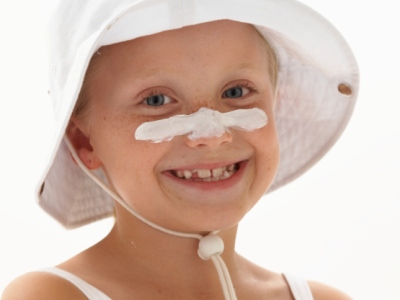
With all the sunscreens available these days (organic or mineral? water-resistant or sweat-resistant? lotion or spray?), choosing the right one for your kids can be tricky. But what matters most when picking a sunscreen is how well it protects skin from UV rays. Donna shares valuable information from Kidshealth.com on what you should know.
How to Choose

Look for SPF (sun protection factor) numbers on the labels of sunscreens. Select an SPF of 30 or higher to prevent sunburn and tanning, both of which are signs of skin damage. Choose a sunscreen that protects against both UVA and UVB rays (usually labeled as a "broad-spectrum" sunscreen).

Sunscreen sprays are convenient but should be used with caution. For starters, sprays are easy to breathe in, which can irritate the lungs. Some sprays also are flammable, so you need to avoid sparks or flames when applying them and wearing them. And, sprays make it hard to tell if you have applied enough sunscreen, which increases the risk of sunburn.

Other things to consider:


  • Don't use sunscreens with PABA, which can cause skin allergies.
  • For sensitive skin, look for products with the active ingredient titanium dioxide.
  • If your teen or preteen wants to use a self-tanner sunscreen, be sure to get one that also has UV protection (many offer little or none).
  • Babies younger than 6 months should be kept out of the sun. When going outside, dress your baby in lightweight clothes that cover arms and legs — and don't forget a hat. If you can't avoid the sun, you can use a small amount of sunscreen on your baby's exposed skin, like the hands and face.

How to Use

For sunscreen to do its job, it must be used correctly. Be sure to:


  • Apply sunscreen whenever your kids will be in the sun. For best results, apply sunscreen about 15 to 30 minutes before kids go outside.
  • Don't forget about ears, hands, feet, shoulders, and behind the neck. Lift up bathing suit straps and apply sunscreen underneath them (in case the straps shift as a child moves). Protect lips with an SPF 30 lip balm.
  • Apply sunscreen generously — dermatologists recommend using 1 ounce (enough to fill a shot glass) to cover the exposed areas of the body.
  • Reapply sunscreen often, about every 2 hours. Reapply after a child has been sweating or swimming.
  • Apply a water-resistant sunscreen if kids will be around water or swimming. Water reflects and intensifies the sun's rays, so kids need protection that lasts. Water-resistant sunscreens may last up to 80 minutes in the water, and some are also sweat-resistant. But regardless of the water-resistant label, be sure to reapply sunscreen when kids come out of the water.
  • Don't worry about making a bottle of sunscreen last. Stock up, and throw out any sunscreen that is past its expiration date or that you have had for 3 years or longer.
  • Every child needs sun protection. The American Academy of Dermatology (AAD) recommends that all kids — regardless of their skin tone — wear sunscreen with an SPF of 30 or higher. Although dark skin has more protective melanin and tans more easily than it burns, tanning is a sign of sun damage. Dark-skinned kids also can get painful sunburns.


And remember to be a good role model. Consistently wearing sunscreen with SPF 30 or greater and limiting your sun exposure will reduce your risk of skin damage and teach your kids good sun sense.


Photo source link : Discovery Channel (http://discoverykids.com/articles/avoiding-sunburn/)

Thursday, May 21, 2015

On-Call… with Editor Donna Thomas

Parents it is that dreadful time of year when all you hear is….

Ah-choo!" It's your son's third sneezing fit of the morning, and as you hand him another tissue you wonder if these cold-like symptoms — the sneezing, congestion, and runny nose — have something to do with the recent weather change. If he gets similar symptoms at the same time every year, you're likely right: seasonal allergies are at work.

The following article from KidsHealth.com is very informative regarding seasonal allergies. However, please make an appointment for your child, with your Pedimedica physician for an allergy check-up if signs and symptoms appear.

Seasonal allergies, sometimes called "hay fever" or seasonal allergic rhinitis, are allergy symptoms that occur during certain times of the year, usually when outdoor molds release their spores, and trees, grasses, and weeds release tiny pollen particles into the air to fertilize other plants.
The immune systems of people who are allergic to mold spores or pollen treat these particles (called allergens) as invaders and release chemicals, including histamine, into the bloodstream to defend against them. It's the release of these chemicals that causes allergy symptoms.
People can be allergic to one or more types of pollen or mold. The type someone is allergic to determines when symptoms occur. For example, in the mid-Atlantic states, tree pollination is February through May, grass pollen runs from May through June, and weed pollen is from August through October — so kids with these allergies are likely to have increased symptoms at those times. Mold spores tend to peak midsummer through the fall, depending on location.
Even kids who have never had seasonal allergies in years past can develop them. Seasonal allergies can start at almost any time, though they usually develop by 10 years of age and reach their peak in the early twenties, with symptoms often disappearing later in adulthood.

Signs and Symptoms

If your child develops a "cold" at the same time every year, seasonal allergies might be to blame. Allergy symptoms, which usually come on suddenly and last as long as a person is exposed to a particular allergen, can include:
·         sneezing
·         itchy nose and/or throat
·         nasal congestion
·         clear, runny nose
·         coughing
These symptoms often come with itchy, watery, and/or red eyes, which are called allergic conjunctivitis. If your child has wheezing and shortness of breath in addition to these symptoms, the allergy may have progressed into asthma.
Seasonal allergies are fairly easy to identify because the pattern of symptoms returns from year to year following exposure to an allergen.
Talk with your doctor if you think your child might have allergies. The doctor will ask about symptoms and when they appear and, based on the answers and a physical exam, should be able to make a diagnosis. If not, the doctor may refer you to an allergist for blood or allergy skin tests.
To determine an allergy's cause, allergists usually do skin tests in one of two ways:
1.    A drop of a purified liquid form of the allergen is dropped onto the skin and the area is pricked with a small pricking device.
2.    A small amount of allergen is injected just under the skin. This test stings a little but isn't extremely painful. After about 15 minutes, if a lump surrounded by a reddish area appears (like a mosquito bite) at the injection site, the test is positive.
Even if a skin test or a blood test shows an allergy, a child must also have symptoms to be definitively diagnosed with an allergy. For example, a child who has a positive test for grass pollen and sneezes frequently while playing in the grass would be considered allergic to grass pollen. 

Treatment

There is no real cure for seasonal allergies, but it is possible to relieve symptoms. Start by reducing or eliminating exposure to allergens. During allergy season, keep windows closed, use air conditioning if possible, and stay indoors when pollen counts are high.
Have your child wash hands or shower and change clothing after playing outside. And a child with seasonal allergies should not mow the lawn (this tends to kick up pollen and mold spores).

If reducing exposure isn't possible or is ineffective, medicines can help ease allergy symptoms. These may include decongestants, antihistamines, and nasal spray steroids. If symptoms cannot be managed with medicines, the doctor may recommend taking your child to an allergist or immunologist for regular allergy shots (immunotherapy), which can help desensitize kids to allergens.

Tuesday, March 31, 2015

On Call with Editor Donna Thomas


Do you have a teenager who just got their license, or do they have friends who have just gotten their and your child is now a frequent passenger? It all starts to happen in their junior year in High School in NJ.

In March the AAA report was all over the media reporting the significant rise in numbers of teens texting while driving, resulting in accidents.

It’s never too early or too late to engage in conversation with your children about the dangers of texting and driving. As a matter of fact, it needs to be an ongoing conversation, gentling reminding them of the danger and consequences.

It can often be awkward for your teen to speak to a friend about texting while driving, so you need to be able to give them ways they can open up the conversation with their friend who is the culprit.

There was an excellent article on aboutkidshealth.com that I would suggest you all read. As well as the many other well written related articles linked to this article, which I am happy to share with our readers:

5 Ways to Get Drivers to Stop Texting

More and more passengers are speaking up about texting and driving. If a texting driver is making you nervous but you're not sure how to bring the topic up, here are some ideas:
1.    The direct approach. Say, "I'm sorry, but I get really nervous when people text and drive." Wait to see how the person responds. Most people will admit it's probably not a good idea or they'll at least put down the phone.
2.    The subtle approach. If you don't feel comfortable telling a driver to quit texting outright, try hinting:"Would you like me to type for you since you're driving?" Or, since more states are handing out tickets for texting and driving, you could say, "I've seen a lot of cops out today, you might not want to text right now." Or point out things the driver has missed seeing (or narrowly missed hitting). As in, "Did you see that dog/kid/overturned bank truck?"

If you know the person your driver is texting, ask the driver to hand over the phone so you can say something. Then send a message that says, "Driving, talk to you later."

If your driver teases you about being nervous, it's the perfect opener to say, "Yeah, texting and driving freaks me out. You never know if the person in front or behind is doing it too."
3.    The "Wow, look at that bad driver!" approach. Point out drivers who wander into the next lane, drive 45 on the highway, run a stop sign, or stop at a green light. Then make guesses about who they're texting. Or make up a variation on the punch buggy game, awarding points each time you see a driver who seems to be texting (this has the added benefit of forcing your own driver to focus on the surroundings, not the screen).
4.    The group approach. If your whole group thinks a driver is a hazard, make a plan together. Take away the driver's car keys: It's what you're supposed to do with drunk drivers, and studies show that texting drivers are even more dangerous. Or agree not to ride with that person. If several people boycott a driver, he or she will get the message.
5.    The life-saving approach. If someone continues to text and drive or mocks you for worrying about it, avoid riding with that person. Let texting drivers know you're cutting them off (if you feel comfortable doing so) — a little shame makes people think twice about bad habits. Or say something like, "My dad told me I can't ride with you because he says you text and drive."

Speaking of parents: As we all know, it's not just young drivers who text. If you're stuck in a car with an adult who is texting (or tweeting or emailing) behind the wheel, be direct and tell them to stop. Most adults know that parents are constantly telling kids not to text and drive, so they should feel embarrassed enough to put down the phone.
If a driver absolutely won't stop texting or laughs at you for being nervous, don't argue. The last thing anyone needs is a road-raging, texting driver. Get out the car as soon as you can. Next time that driver offers to give you a ride, say, "no, thanks."

Thursday, February 12, 2015

On Call with Editor Donna Thomas

In recent months the media has reported a spike in Measles outbreaks in the U.S. Although there has only been only one suspected case in NJ, released by the New Jersey Department on Health last week, it is currently being investigated. The one year old child, who resides in Jersey City had not been vaccinated. The doctors at Pedimedica do not feel parents should become alarmed, however they stress the importance on having your child properly vaccinated for all recommended immunizations at the appropriate ages.

To learn more about the Measles and recommended vaccinations, we share with our readers an informative article from kidshealth.org, the #1 most-trusted source for physician-reviewed information on children's health and parenting issues.

About Measles
Measles, also called rubeola, is a highly contagious respiratory infection that's caused by a virus. It causes a total-body skin rash and flu-like symptoms, including a fever, cough, and runny nose. Though rare in the United States, 20 million cases happen worldwide every year.
Since measles is caused by a virus, there is no specific medical treatment for it and the virus has to run its course. But a child who is sick should drink plenty of fluids, get lots of rest, and be kept from spreading the infection to others.

Signs and Symptoms
While measles is probably best known for its full-body rash, the first symptoms of the infection are usually a hacking cough, runny nose, high fever, and red eyes. Children who get the disease also may have Koplik's spots, small red spots with blue-white centers that appear inside the mouth.

The measles rash breaks out 3-5 days after symptoms start, and can coincide with high fevers up to 104°F (40°C). The red or reddish-brown rash usually first shows up as flat red spots on the forehead. It spreads to the rest of the face, then down the neck and torso to the arms, legs, and feet. The fever and rash gradually go away after a few days.
Measles is highly contagious — 90% of people who haven't been vaccinated for measles will get it if they are near an infected person. Measles spreads when people breathe in or have direct contact with virus-infected fluid, such as the droplets sprayed into the air when someone with measles sneezes or coughs. A person who is exposed to the virus might not show symptoms until 8-10 days later.

People with measles are contagious (can spread the disease) from 5 days before the rash appears until about 4 days after that, and are most contagious while they have a fever, runny nose, and cough.

Recent Outbreaks
Measles is very rare in the United States. Before measles vaccination became available in the 1960s, more than 500,000 cases were reported every year. Back then, about 500 people died of the disease each year, and around 4,000 people a year had encephalitis (swelling of the brain) from the disease.

Due to widespread immunizations, the number of U.S. measles cases declined steadily to a low of 37 people in 2004. From 2000 to 2007, only about 63 cases per year were reported.
But recent years have seen spikes in measles outbreaks, including 131 cases in the first half of 2008 and 644 cases in 2014. Most U.S. outbreaks begin with people who were infected outside of the country, with the disease spreading quickly in areas where too few people have received the vaccine. About 85% of people infected with measles were not immunized or their immunization status was unknown, although they were eligible to receive the vaccine.

The people at highest risk of getting measles during these outbreaks are infants (who aren't old enough to get the vaccine), pregnant women, and people with poor nutrition or weakened immune systems.The most important thing you can do to protect your kids from measles is to have them vaccinated according to the immunization schedule prescribed by your doctor.

Monday, January 19, 2015

On Call with Editor Donna Thomas


In last months issue of On Call, Pedimedica addressed the need for children and adults to get the flu shot if they hadn't yet been vaccinated. Although the vaccine doesn't  guarantee that you won't  get the flu, it does reduce your risk, and in some cases can lessen the severity of your symptoms if you do become infected.

Editor Donna Thomas turned to KidsHealth.org, the most-visited site devoted to children's
health and development, to answer some frequently asked questions that parents have regarding the Flu. If you have any further questions or concerns don't hesitate to call your Pedimedica doctor.

Is It a Cold or the Flu?
Your child is sent home from school with a sore throat, cough, and high fever — could it be the flu that's been going around? Or just a common cold?
Although the flu (or influenza) usually causes symptoms that make someone feel worse than symptoms associated with a common cold, it's not always easy to tell the difference between the two.

Symptoms Guide
The answers to these questions can help determine whether a child is fighting the flu or combating a cold:

Flu vs. Colds: A Guide to Symptoms

Questions                                      Flu                 Cold
Was the onset of illness ...            sudden?         slow?
Does your child have a ...             high fever?     no (or mild) fever?
Is your child's exhaustion level ...severe?           mild?
Is your child's head ...                  achy?              headache-free?
Is your child's appetite ...             decreased?      normal?
Are your child's muscles ...          achy?              fine?
Does your child have ...               chills?             no chills?

If most of your answers fell into the first category, chances are that your child has the flu. If your answers were usually in the second category, it's most likely a cold.

But don't be too quick to brush off your child's illness as just another cold. The important thing to remember is that flu symptoms can vary from child to child (and they can change as the illness progresses), so if you suspect the flu, call the doctor. Even doctors often need a test to tell them for sure if a person has the flu or not since the symptoms can be so similar!

Some bacterial diseases, like strep throat or pneumonia, also can look like the flu or a cold. It's important to get medical attention immediately if your child seems to be getting worse, is having any trouble breathing, has a high fever, has a bad headache, has a sore throat, or seems confused.
While even healthy kids can have complications of the flu, kids with certain medical conditions are at more of a risk. If you think your kid might have the flu, contact your doctor.

Treatment
Some kids with chronic medical conditions may become sicker with the flu and need to be hospitalized, and flu in an infant also can be dangerous. For severely ill kids or those with other special circumstances, doctors may prescribe an antiviral medicine that can ease flu symptoms, but only if it's given within 48 hours of the onset of the flu.
Most of the time, you can care for your child by offering plenty of fluids, rest, and extra comfort.
And if the doctor says it's not the flu? Ask whether your child should get a flu shot.

Tips for Treating the Flu
The flu can make someone feel pretty miserable for up to a week, but it usually won't need medical treatment unless a person develops complications.

Some people are at high risk for serious complications if they get the flu, including children younger than 5 years old, pregnant women, people with asthma, and those with weakened immune systems. If they get the flu and their symptoms are reported within the first 2 days of the illness, a doctor might prescribe an antiviral medicine. But these medicines usually only shorten the course of the infection by 1 or 2 days.

If your child gets the flu:

  • Offer plenty of fluids (fever, which is common with the flu, can lead to dehydration). If your child is tired of drinking plain water, try ice pops, icy drinks mixed in a blender, and soft fruits (like melons or grapes).
  • Encourage your child to rest in bed or on the couch with a supply of magazines, books, quiet music, and perhaps a favorite movie.
  • Give acetaminophen or ibuprofen for aches and pains (but do not give aspirin unless your doctor directs you to do so).
  • Dress your child in layers so you can add and remove layers during bouts of chills or fever.
  • Ask a close relative or faraway friend to call and help lift your child's spirits.
  • Take care of yourself and the other people in your family! If you haven't done so, ask your doctor whether you (and other family members) should get a flu vaccine. Also, wash your hands well and often, especially after picking up used tissues.

If your doctor prescribes medicine to ease symptoms, be sure to call the pharmacist before you go to pick it up. The flu can strongly affect many areas of the United States, so some pharmacies might have trouble keeping the medicines in stock.

Monday, December 1, 2014

On call with Dr. Kolsky

Although it's important to get vaccinated early in the fall, it's not to late to get your children vaccinated for the Flu. Dr. Kolsky recommends parents read this article from Kids Health, the most-visited site on the Web for information about health, behavior, and development from before birth through the teen years.

Dr. Kolsky believes it's important for parents to become educated on the vaccine and how it can help keep your family healthy through the holidays and into the new year.

Is it too late to get the Flu vaccine? 
 
Flu season runs from October to May, with most cases happening from late December to early March. But the flu vaccine is usually offered from September until mid-November. Getting vaccinated before the flu season is in full force gives the body a chance to build up immunity to (protection from) the virus. 

Even though it's best to get vaccinated as soon as the flu vaccine is available, getting the vaccine later can still be helpful. Even as late as January, there are still a few months left in the flu season, so it's still a good idea to get protected.


Who Should Get the Flu Vaccine?

The flu vaccine is recommended for everyone age 6 months and older. It's especially important for people who are at greater risk of developing health problems from the flu to get vaccinated. They include: 

  • all kids 6 months through 4 years old (babies younger than 6 months are also considered high risk, but they cannot receive the flu vaccine)
  • anyone 65 years and older
  • all women who are pregnant, are considering pregnancy, have recently given birth, or are breastfeeding during flu season
  • anyone whose immune system is weakened from medications or illnesses (like HIV infection)
  • residents of long-term care facilities, such as nursing homes
  • anyone (adults, teens, and kids) with a chronic medical condition, such as asthma
  • kids or teens who take aspirin regularly and are at risk for developing Reye syndrome if they get the flu
  • caregivers or household contacts of anyone in a high-risk group (like children younger than 5 years old, especially those younger than 6 months, and those with high-risk conditions)
  • Native Americans and Alaskan Natives
Kids under 9 years old who are getting the flu vaccine for the first time will receive two separate doses at least a month apart. Those under 9 who have received the flu vaccine before still might need two doses if they did not receive at least two vaccines since July 2010, or if the number of doses they've received since July 2010 is unknown. This is to ensure that all kids are vaccinated against the H1N1 flu strain that surfaced in 2009. Kids older than 9 years old only need one dose of the vaccine.

It can take 1 to 2 weeks for the flu vaccine to become effective, so it's best to get vaccinated as soon as possible.
 

Listen

Types of Flu Vaccine

Different types of vaccines are available. One type (called trivalent) protects against three strains of the flu virus (usually, two types of influenza A viruses and one influenza B virus). Another (called quadrivalent) protects against four strains. 

The vaccine can be given to kids in two different ways: by injection with a needle (the flu shot), or sprayed into the nostrils (nasal spray or nasal mist).

Both ways of delivering the vaccine are effective, but recent studies show that the nasal spray may work better in younger children. So experts recommend that healthy kids 2 to 8 years old get the nasal spray vaccine when available. If it's not available, the flu shot should be given (kids should not wait for the nasal spray to get vaccinated). The nasal spray isn't recommended for kids with certain medical conditions or pregnant women. 

Some vaccines are approved only for adults at this time, such as egg-free vaccines and intradermal shots, which are injected into the skin (instead of muscle) with a smaller needle.

Those Who Should Not Get the Vaccine

Certain things might prevent a person from getting the vaccine. Talk to your doctor to see if the vaccine is still recommended if your child:

  • has ever had a severe reaction to a flu vaccination
  • has Guillain-Barré syndrome (a rare condition that affects the immune system and nerves)
In the past, it was recommended that anyone with an egg allergy talk to a doctor about whether receiving the flu vaccine was safe because it is grown inside eggs. But health experts now say that the amount of egg allergen in the vaccine is so tiny that it (but not the nasal mist) is safe even for kids with a severe egg allergy. This is especially important during a severe flu season.
 
Still, a child with an egg allergy should get the flu shot in a doctor's office, not at a supermarket, drugstore, or other venue. And if the allergy is severe, it might need to be given in an allergist's office.

If your child is sick and has a fever, talk to your doctor about rescheduling the flu vaccine.

Are There Side Effects?

Most people do not have any side effects from the flu shot. Some have soreness or swelling at the site of the shot or mild side effects, such as headache or low-grade fever.

Some people who get the nasal spray vaccine may develop mild flu-like symptoms, including runny nose, headache, vomiting, muscle aches, and fever.


Where Can My Family Get the Vaccine?

The flu vaccine is available at:
  • many health care settings, including doctors' offices and public, employee, and university health clinics
  • some pharmacies
  • some supermarkets
  • some community groups or centers
  • some schools

If you have an HMO insurance plan, be sure to check with your primary care doctor before having your kids vaccinated outside the office, since most HMOs will pay for shots only if they're given through.

Thursday, September 11, 2014

On Call with Dr. Basil Bruno

Raising teens is both rewarding and challenging from a social and academic perspective. It is also a very important time for teens to learn how to take charge of their health care. Dr. Bruno shares this very informative article from kidshealth.com on how to guide your teens through this process.

Please feel free to reach out at any time to ask any of the doctors or staff for assistance in educating your family on important health matters. We are there to support you.

Helping Teens Take Charge of Their Health Care

Preparing kids for independence and adulthood brings many challenges for parents teaching teens to drive, negotiating later curfews, researching colleges, discussing tough topics, to name just a few.
 
Among these hurdles is helping teens start managing their own health care. It can be hard to let go after all, mom and dad have been handling the doctors' appointments, prescriptions, immunizations, and countless other medical concerns since their kids were born.

But it's important to guide teens toward taking on this responsibility. After all, parents won't always be around to manage their children's health care and in most cases, once their kids become adults, legally they won't be allowed to.
 
And keep in mind that the decisions made in the teen years about things like alcohol, drugs, healthy eating, exercise, sex, and smoking can have long-term consequences even if teens feel invincible. Becoming more invested in their own health care lets teens learn more about and understand the potential outcomes of choices they make now.
 
At what age are teens able to start taking some control? It can vary: factors like a teen's maturity level, health issues, and ability to keep track of the details all play a role, as does a parent's willingness to relinquish control.
 
So, how can parents start handing over the reins? It can begin by talking about medical topics in age-appropriate ways with their kids; for instance, discussing medications they take and why, or teaching kids with chronic conditions ways to help care for their medical equipment. Maybe your teenage son or daughter is ready to handle filling and refilling his or her own prescriptions.

It's important for moms and dads to let their adolescents have some private time to talk with the health care provider. During puberty and the teen years, kids are likely to have questions or issues that they're not comfortable discussing with a parent in the room. (But be assured that a doctor who feels that a patient who might be at risk for self-harm or harming another will alert a parent.) 

If you think your child might need additional help with teen issues, consider having your son or daughter meet with an adolescent medicine specialist. These doctors not only are well-versed in the care of teens' physical health problems but also have additional training in helping their patients deal with risky behaviors and mental health concerns. 

It's also wise to talk about health insurance and medical records to older teens. Although young adults can stay on their parents' plan until age 26 under the health care reform bill, many will be on their own well before that and eventually all will have to know how to navigate the insurance system and keep track of their records.